
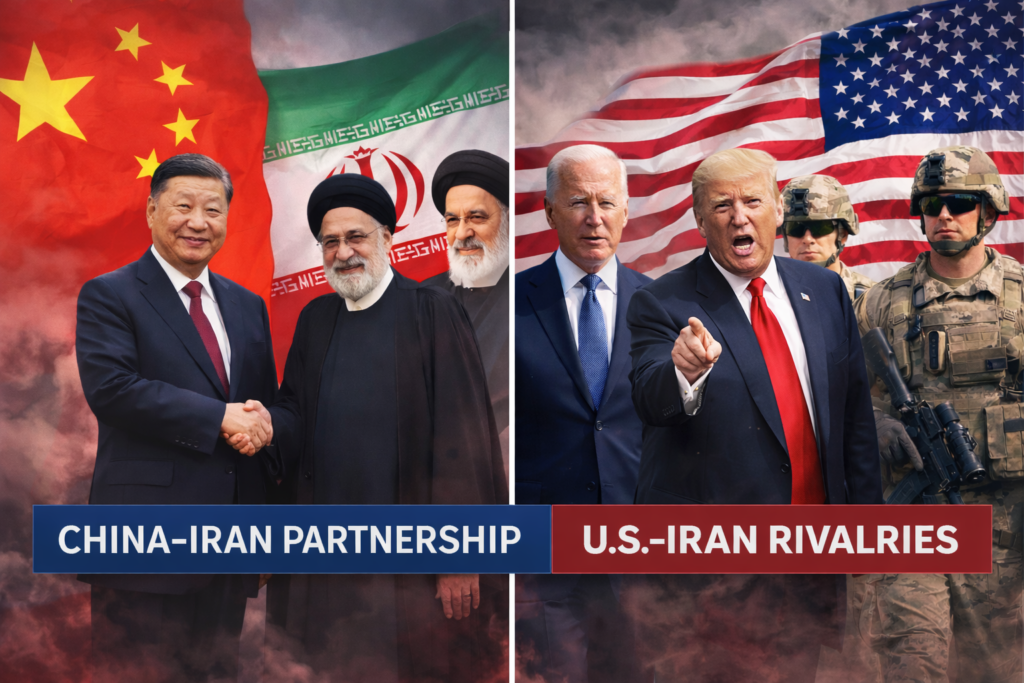
In February 2026, tensions between the United States and Iran have escalated due to Iran’s nuclear program, military activities in the Persian Gulf, and broader geopolitical rivalries in the Middle East. Previously, the Obama administration had established a nuclear deal with Iran, which was later dismissed by the Trump administration under pressure from Israel. Meanwhile, China’s engagement with Iran has deepened across economic, diplomatic, and emerging security dimensions, raising questions about how Beijing’s role influences the trajectory of the US-Iran standoff.
China and Iran uphold a comprehensive and long-term strategic partnership that encompasses economic, energy, and infrastructure collaboration, notably under frameworks like the Iran–China 25-year Cooperation Program. This partnership also includes China’s covert agenda to counter India and its interests. Through this agreement, Beijing has pledged significant investments in Iran’s oil, gas, and related sectors, bolstering Iran’s economic resilience amid Western sanctions. Beijing values this relationship for three key reasons:
- Energy Security: As a result of US sanctions on Iran’s oil and gas, China seizes the opportunity to secure its long-term energy needs at a lower cost.
- Geostrategic Positioning: Iran’s adversarial stance toward the United States, supported by its proxies, diverts American diplomatic and military attention away from China’s core interests in East Asia.
- Regional Influence: Iran acts as a gateway for China to extend its influence in Southwest Asia and the broader Middle East.
China is increasingly interested in Iran’s strategically significant Chabahar Port, which has been partially developed by India. As of early 2026, India is scaling back its involvement in the port, primarily due to the upcoming expiration of U.S. sanctions waivers in April 2026. This move represents a strategic withdrawal to avoid secondary sanctions. Although India previously obtained waivers, the renewed pressure and potential tariffs under the Trump administration have rendered continued operations, managed by India Ports Global Ltd, both legally and financially precarious. India has used Chabahar to circumvent Pakistan for trade with Central Asia, but China’s potential involvement, supported by a 25-year, $400 billion cooperation program, poses a threat to this advantage. China aims to expand its Belt and Road Initiative (BRI) by linking it with Pakistan’s Gwadar Port, thereby solidifying its Eurasian trade routes and securing energy resources.
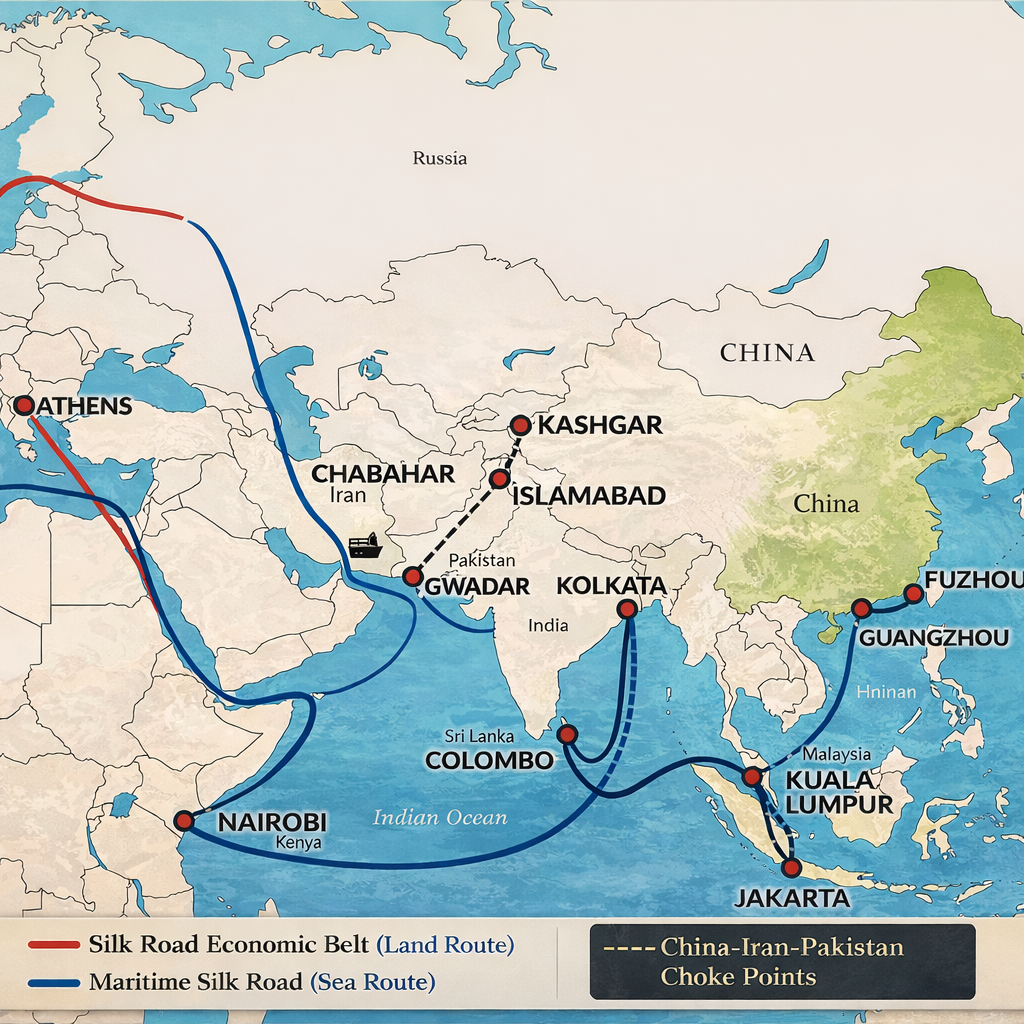
China’s Role in the Context of US-Iran Tensions
While China publicly advocates for dialogue and a peaceful resolution to US-Iran tensions, its deepening ties with Tehran have several indirect yet significant effects. China’s strategic and economic policy aims to safeguard its interests without directly involving itself in the conflict. Consequently, China quietly strengthens Iran’s security and alleviates the pressure of economic sanctions by purchasing its oil and gas. Chinese cooperation provides Iran with economic cover from sanctions and helps mitigate the punitive impact of American policies. Beijing’s rhetoric in favor of negotiations underscores both diplomatic prudence and a desire to avoid regional escalation that could disrupt energy markets and global trade routes. Recent reports suggest that Iran is close to acquiring advanced Chinese anti-ship missiles, significantly enhancing Tehran’s military capabilities. This type of security cooperation could complicate Washington’s strategic calculations in the region, forcing the U.S. to consider China’s contributions in its military and diplomatic planning. In response to escalating tensions with Iran, the United States has deployed major naval assets to the Persian Gulf and supported regional allies. Meanwhile, Iran’s strategic collaboration with rivals like Russia, along with strong ties to China, adds complexity to Washington’s efforts to isolate Tehran.
Broader Geopolitical Implications
China’s increasing involvement with Iran unfolds within the context of the strategic rivalry between the US and China. Although Beijing typically steers clear of direct military confrontations with Washington, its economic and political backing of Tehran indirectly diminishes U.S. influence in the region and can extend diplomatic deadlocks.
For example:
- China’s energy and investment connections diminish the impact of American sanctions.
- Iran’s bolstered military capabilities might discourage unilateral actions by the US.
- Meanwhile, Beijing’s support for negotiation presents a stark contrast to Washington’s strategy of exerting pressure.
The relationship between China and Iran plays a pivotal role in the complex landscape of US-Iran tensions. By enhancing economic and security ties with Tehran, Beijing not only bolsters its own regional interests but also alters Washington’s strategic choices. Although China rarely confronts the United States directly, its position as Iran’s key partner complicates American policy, diminishes the impact of sanctions, and fosters a more multipolar and contested order in the Middle East.